Coach Murphy’s Corner: Pitt vs. FSU: Trap Game – Play The Field, Not Your Ego.
Breaking Down Pitt’s Loss to FSU
By Terry Murphy
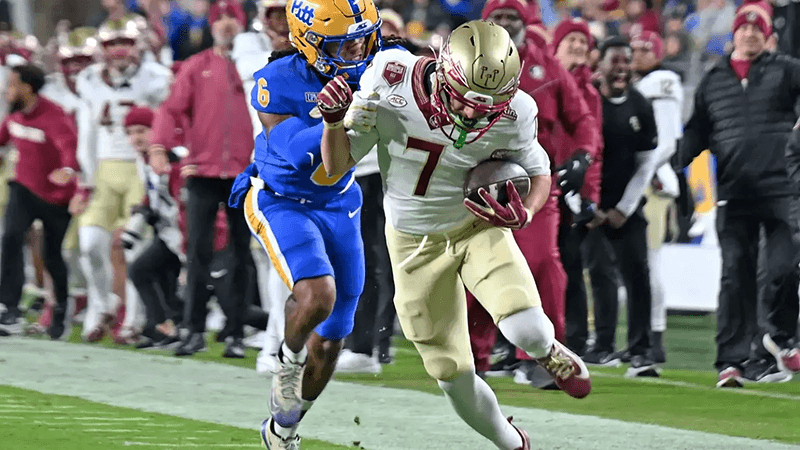
This was a trap game for the coaches. If Pitt won, people would have said they should have won. FSU isn’t good. But Pitt lost, and the coaches gave critics every reason to question their decisions. What can get lost in that criticism is how difficult it is to beat a program like Florida State with a third-string true freshman at quarterback who wasn’t expected to start until shortly before kickoff. That deserves consideration. It doesn’t excuse the decisions.
This was a bad loss, and I hate to say it, but this one is on Coach Duzz. His defense gave Pitt a chance to win. His decisions didn’t consistently reflect what that defense was giving him.
Ego Play Calls
The first thing that jumped out at me was the ego behind the late-game fourth-down decisions. When your defense is playing that well, field position matters. Punt the ball. Pin FSU deep and make them drive the length of the field. Even a touchback makes them go eighty yards.
I don’t care what the analytics suggest if we aren’t also accounting for the game unfolding right in front of us. Pitt held FSU to 260 total yards and 2.9 yards per rushing attempt. Its only touchdown came on a short field after an interception. This wasn’t an offense consistently threatening to march down the field. So why hand it favorable field position?
The decisions to go for it late in the third quarter and early in the fourth felt like pressing when there was no need to press. Football is the ultimate chess match. Sometimes you have to be patient, flip the field, and trust the unit that’s playing well.
Here’s why that matters: if you pin FSU deep and your defense forces a punt, your struggling offense has a chance to take over closer to midfield. You’ve made the next possession easier for your freshman quarterback.
Instead, even after the defense rose to the occasion, forced a fumble, and got the ball back, Pitt needed a ninety-two-yard scoring drive. The offense couldn’t finish it.
I know the coaching line: “We have to be able to get one yard.” But what you believe your offense should be able to do and what it has demonstrated it can do are two different things. When you’ve struggled to move the ball consistently for three quarters, and your defense is holding, you have to coach accordingly.
If you want to disguise the punt out of an offensive formation, fine, provided it’s something you’ve practiced. But the objective remains the same: make FSU earn its field position. Those fourth-down decisions felt short-sighted.
Abandoning the Power Run Game
Pitt also stepped away from the power running game it established two weeks ago and leaned heavily on zone concepts. Without enough counters, pulling linemen, and changes in the point of attack, FSU’s defenders could read the flow and pursue. Their interior strength squeezed the inside lanes, while their speed allowed them to chase down runs stretched toward the perimeter.
Too often, everyone was moving in one direction, and FSU’s defense was moving with them. Make those defenders hesitate. Change their reads and direction. Give them something coming back against the flow. After what Pitt showed against Georgia Tech, I wanted to see that power game remain part of its identity.
Protecting a Freshman Quarterback
At times, Corey Dailey looked unsure of the coverage and his progression. That’s expected from an inexperienced quarterback. On a one-step drop, the ball has to come out on time. If the initial throw isn’t there, you need an answer: reset and deliver to the next available option, escape, or get rid of the football when the situation allows. What you can’t do is stare down your primary receiver while the pressure closes. But helping him find those answers is part of the coaching responsibility.
Dailey threw thirty-four times for 157 yards, roughly 4.6 yards per attempt. With the backs gaining around four yards a carry, I wanted a stronger commitment to the running game to control the clock and reduce the burden on him.
Early on, the passing plan appeared designed to protect him through short routes and quick reads. During the second quarter, he made a couple of successful runs and seemed to settle in. He stopped looking so hesitant and started playing football. He even pushed the ball downfield. That was something to build on.
I wanted packages that repeated familiar route concepts from different formations, shifts, and motions. Change the presentation for the defense while keeping the quarterback’s reads recognizable.
It’s difficult for a young quarterback to execute concepts he hasn’t mastered against live competition. When something works, come back to it. Give him a chance to recognize the coverage, anticipate the opening, and deliver with confidence.
Drops, Drops, Drops
The dropped passes are inexcusable. Dailey’s sixteen completions on thirty-four attempts don’t tell the whole story when catchable balls keep hitting the ground. The players have to finish those catches, and the receiver and tight end coaches have to address the pattern.
As a receivers coach, if my group is dropping passes, we’re catching one hundred balls a day before or after practice. Non-negotiable. And I don’t mean only standing in front of a JUGS machine. Grab a backup quarterback who needs the reps. Run routes. Catch the rock. Work on your craft. Slow the process down and get back to fundamentals:
- Catch the ball and freeze. Take a picture of it.
- Tuck it, keeping your eyes on the ball all the way through the tuck.
- Turn upfield and finish for ten yards.
Secure the catch before chasing the yards. At some point, a captain or coach has to gather that group and establish a routine. Practice the details until they become habit. An inexperienced quarterback needs his receivers to help him, especially when he makes the right read and delivers a catchable ball.
A Bright Spot in the Secondary
Credit goes to Cory Sanders and Archie Collins. The defensive backs challenged receivers at the line of scrimmage and played with a physicality that had been missing. That improvement deserves recognition.
Raion Strader played a strong first quarter, although the deep completion he surrendered near the end of the half appeared to come down to technique. From what I saw, he squared up and reached with his off hand, leaving himself vulnerable to the release on that side. I wanted him to maintain his inside leverage, open at a forty-five-degree angle, and stay on top of the route.
Overall, though, the secondary played well. The improvement was visible. Receivers had to work harder to get into their routes, and the defensive backs competed.
Discipline
Once again, penalties hurt Pitt, and correcting that pattern falls squarely on the head coach. Dropped passes added another layer of wasted opportunities. Together, those mistakes made an already difficult assignment harder for a third-string freshman.
The coaches needed to manage the game around those limitations. Instead, the approach swung from protecting the quarterback to asking the offense to deliver in high-pressure fourth-down situations.
Pitt didn’t need to force this game. It needed to catch the football, avoid costly penalties, and trust a defense that was doing its job.
Patience isn’t passive. Sometimes it’s the risk worth taking.
Terry Murphy is a former Pitt Panther WR, football coach and guest contributor to DreamBackfield since October 2026.