Five Takeaways from Jeff Capel’s Monday Press Conference
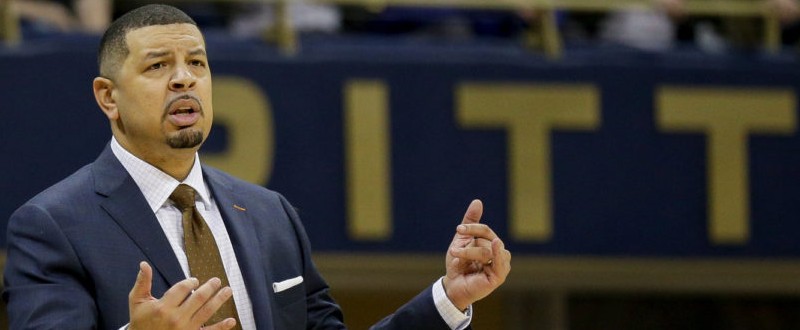
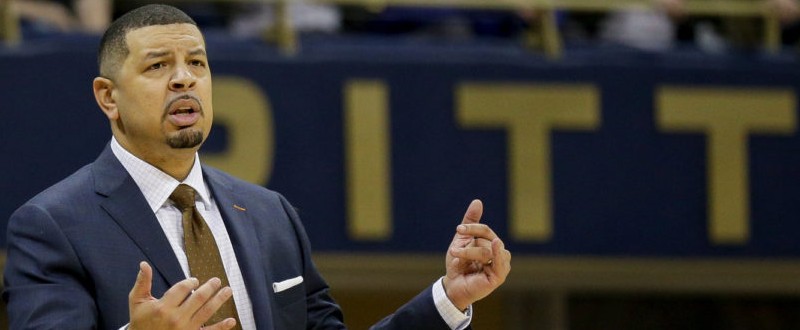
With the Pitt men’s basketball team set to kick off its season in just eight days, head coach Jeff Capel answered some questions from the media during a press conference on Monday afternoon.
The questions covered a wide range of topics, and provided insight into the current state of the men’s basketball program. Here are five key takeaways from Capel’s press conference:
The Panthers will start the 2019-20 season in good health.
One of the most noteworthy revelations of Capel’s press conference was that freshman wing Justin Champagnie is healthy and will play in the season opener against the Florida State Seminoles next Wednesday, Nov. 6 at the Petersen Events Center.
This comes as somewhat of a surprise, given reports earlier this fall that Champagnie hurt his knee in what may have been a season-ending injury. Capel shared that the injury initially occurred on Sept. 10, the day of the Coaches vs. Cancer event at Heinz Field, and he initially feared that Champagnie tore his ACL. In a huge break for the Panthers, a re-evaluation revealed a less-severe knee sprain once the swelling improved.
Having taken three weeks off while awaiting word on the severity of his injury, Champagnie is currently working on getting back into playing shape. Capel said that Champagnie is back to practicing at full speed, and will participate in the Panthers’ scrimmage against Slippery Rock University on Wednesday, Oct. 30.
With Champagnie back in the fold, senior center Kene Chukwuka is Pitt’s only remaining long-term injury, dating back to hip surgery that he had following Pitt’s exit from the ACC Tournament in March. Capel addressed Chukwuka’s injury in the context of “if” rather than “when” he will return, so it is reasonable to expect that he will be out for much of the upcoming season, and perhaps the entire 2019-20 campaign.
Pitt will have more flexible lineup options this season than they did in 2018-19.
Last season, eight Panthers played at least 500 minutes throughout the season. Five of them were guards. Of the eight players in the regular rotation, guards Xavier Johnson, Trey McGowens, Jared Wilson-Frame, and small forward Au’Diese Toney received the greatest share of minutes by a wide margin, with each player seeing at least 800 minutes.
Meanwhile, junior center Terrell Brown and Chukwuka, the team’s only true bigs, received fewer than 600 minutes apiece. Having just one wing and no true bigs near the top of the rotation illustrates Pitt’s lack of frontcourt depth last season, which put them at a disadvantage against many of the bigger, more physical teams in the ACC.
Chukwuka’s absence thins out Pitt’s returning frontcourt depth, leaving Brown as the only returning center from last year’s team. However, Pitt added some skilled big men to the equation this offseason in freshman Karim Coulibaly, who led Mali to the FIBA U19 World Cup Championship game this summer, and graduate transfer Eric Hamilton. Those players alone will allow Capel to run more unique lineup combinations than they did last season, without even mentioning the additions of wings Champagnie and Gerald Drumgoole.
According to Capel, Drumgoole led the Panthers in rebounding in the secret scrimmage vs. Maryland, while Champagnie provides a versatility to the team offensively, defensively, and on the boards, that Pitt did not have last year. Combined with the true bigs on the roster, these two freshmen wings give Capel more flexibility in how to utilize his rotation for the upcoming season.
While it is a relatively safe bet that Johnson and McGowens to lead the team in minutes yet again, Capel suggested that unlike last season, the team may have flexibility this season to play bigger lineups for extended periods. This could prove key against opponents like Florida State, which have elite length and rebounding skill.
Pitt can also choose to play smaller lineups at times as they often did last year, with the addition of sharpshooter junior college addition Ryan Murphy expected to help replace some of the production lost with the graduation of Wilson-Frame.
At the end of the day, Pitt’s ability to compete for rebounds with teams that are bigger than they are will be key to their success. The option to play bigger lineups without sacrificing talent this year speaks to the type of player that Capel has been able to recruit to Pitt thus far, and that should help Pitt out as they face off against big, physical ACC foes.
Capel’s staff did not seek a waiver for transfer guard Ithiel Horton, which might have allowed him to play this season.
One player who will not hit the court this upcoming season is Ithiel Horton, the transfer guard out of Delaware. Horton played last season as a true freshmen for the Blue Hens, and will have three more seasons of eligibility following his redshirt season this year.
When asked whether Pitt ever considered seeking a waiver that might have allowed Horton to play for Pitt during the upcoming season, Capel answered with one word: no.
I found this to be interesting, and perhaps even puzzling, for multiple reasons. First, Pitt does not know exactly what they have in Horton. While he excelled last season at Delaware, there is a major talent gap between playing in the Colonial Athletic Association and playing in the ACC. I think Pitt would have been wise to get Horton involved this year to see what talent they have in the backcourt moving into a potential future where Xavier Johnson leaves for the NBA.
Moreover, Pitt’s ability to play smaller lineups if they want would have been bolstered by Horton’s addition to the rotation. The graduations of N’Dir and Wilson-Frame leave Johnson and McGowens as the only two returning guards with Division I basketball experience. While Murphy is a nice addition to the team, having just three true guards in the rotation will place a lot of pressure on Johnson and McGowens. Should Pitt suffer an injury to its backcourt, they could find themselves in a really tricky situation.
Since he played last season as a true freshman, Horton would still have two future years of eligibility if he had played this season. With the type of player that Capel’s staff has shown the ability to recruit, those two years could have provided plenty of buffer for Pitt to find their next wave of backcourt talent.
Finally, it would not cost Pitt or Horton anything to seek this type of waiver, and it seems like a “nothing to lose” type of situation. In a best case scenario, Horton could have played this year and has two more years of eligibility; in a worst case, he would have redshirted and maintained three years left. And given the rate at which transfer waivers have been approved this offseason, it seems like Horton would have had a decent shot of having his waiver approved.
My unofficial transfer waiver tally:
Approved: 46
Denied: 8
Still Waiting: 67— Jeff Goodman (@GoodmanHoops) October 25, 2019
Regardless, Pitt will play this season without Horton. Hopefully that will be inconsequential with a more experienced and talented frontcourt, which should allow for lineups that are less guard-heavy than last season.
Pitt will be ready to play when Florida State comes to town next week.
Make no mistake–Pitt will need to hit the ground running to have a chance to beat the Seminoles. Florida State, who reached the Elite Eight in 2018 and the Sweet Sixteen this past season, returns two talented guards in Trent Forrest and MJ Walker, who started 36 and 34 games last season, respectively.
While Florida State loses significant minutes from its frontcourt rotation with the graduations of Phil Cofer and Christ Koumadje as well as the departure of Mfiondu Kabengele for the NBA, head coach Leonard Hamilton more than made up for the loss of height as he brought in three 7-footers this offseason, including elite Serbian center Balša Koprivica. Florida State will also head to Pittsburgh with one of the premier signees of the 2019 recruiting class in five-star small forward Patrick Williams.
Needless to say, for all of the talent that Florida State lost after this past season, they have more than made up for it with their 2019 additions and will be a tough matchup for any team. So will Pitt be ready next Wednesday?
Capel discussed that on Monday, emphasizing the importance of preparation over the summer and throughout the fall with a big-time ACC opponent on the schedule to start the season. Capel said that a large part of the rationale of taking the Italy trip this summer was to get the Panthers, and especially the freshmen, some live-game action before the season.
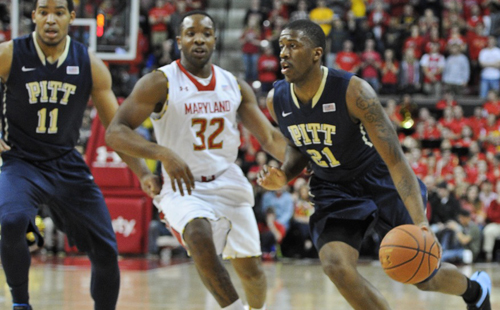
Pitt also scheduled a scrimmage with the Maryland Terrapins specifically to prepare the Panthers to hit the ground running to start this season. The staff wanted to schedule a team that is similar to Florida State to get the team ready for their season opener. Maryland, who Capel described as similar in length and athleticism to the Seminoles, gave Pitt the chance to face off against a solid program that resembles Pitt’s season-opening opponent.
The importance of this moment is not lost on Pitt’s coaches, and they have worked to get their players as much game preparation as they can for the start of the season. That effort culminates with Wednesday’s scrimmage against Slippery Rock, where Pitt can work on some fine tuning before next week’s tip-off.
However, you should not expect a finished product to take the court next Wednesday.
Despite starting its season with a conference matchup, you should not expect Pitt to start the year in mid-season form. Capel emphasized that while he feels good with where the team is right now, there is still a long way to go before the Panthers get to where they need to be.
The hard work and positive attitudes are there, but Pitt needs to do a better job at defensive rebounding than they did against Maryland to compete with Florida State and the rest of the ACC. Capel says that the team still does not have a proven rebounder, and that rebounding fundamentals are going to be key for the Panthers this year.
A team of Pitt’s caliber typically starts its season with several out-of-conference matchups that allow the team to work out some of the kinks–an opportunity that they will not have this year. That could mean that Pitt falls short in its season opener, but it does not mean that they can’t still have a successful 2019-20 campaign.
The road will be tough, though, with a more difficult fall slate than last season, as Pitt will face off against West Virginia, Kansas State, Rutgers, and conference opponent Louisville before the calendar flips to January. The result will be a battle-tested Panthers team that should be much more competitive in ACC play this season than they were last season. The team might not be there just yet, but the progress will come and the results will surely follow.