Coach Murphy’s Corner: Pitt vs. Louisville: Where’s the Identity?
Breaking Down Pitt’s Loss to Louisville
By Terry Murphy
The mistakes look familiar. The team’s identity doesn’t. Pitt vs. Louisville was a hard watch. Another struggling offensive performance. Another inexperienced quarterback asked to find answers without a consistent running game behind him. Another evening of penalties, dropped passes, and opportunities that went nowhere.
Final score: Louisville 42, Pitt 10. And those ten points tell their own story. Pitt’s lone touchdown came from the defense on a fumble return. The other three points came from Antonio Chadha’s leg on a fifty-seven-yard field goal. The offense never found the end zone.
But what bothered me most wasn’t the scoreboard. It was that I no longer recognize the identity or playing style of this team. A 5–0 start has turned into five losses in six games. That isn’t one bad night. It’s a pattern, and patterns are what coaches are paid to break.
Stay With What Works
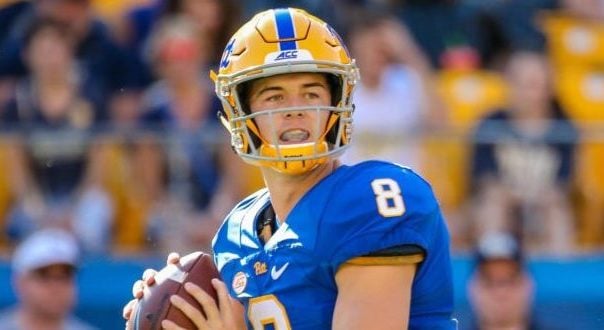
Damon Ferguson Jr. finished with forty-six yards on eleven carries, a little over four yards a pop. That doesn’t mean Pitt could have run its way out of every problem. It does make me ask why the offense keeps walking away from productive runs before the defense proves it can stop them. Eleven carries. That’s it.
We’ll have two successful runs, then start throwing. An incomplete pass, a negative play, and suddenly we’re asking an inexperienced quarterback to rescue the possession on third-and-long.
I understand that four yards a carry doesn’t tell the whole story. Down, distance, field position, and defensive alignment all matter. But so does giving your offense something it can establish, repeat, and lean on when things get tight. Before the score gets away from you, make the defense defend the run. Make those linebackers shed blocks and tackle Ferguson for four quarters. If they stop it, adjust. Go to play-action and RPOs. Let the run game open the throws for your young quarterback. But don’t do their adjusting for them.
Pitt has already shown it can win with a power running game. Against Georgia Tech, pulling linemen created movement and gave Ferguson something to follow. The offense found its rhythm because the run game set the tone. That should be the foundation, especially with the uncertainty at quarterback. Instead, it feels like a place we only visit. I want to see the guard and tight end pulling, Ferguson following his blocks, and an offense that makes a defense account for more than one direction. Run the counter. Run the trap. Change the point of attack. Make those linebackers hesitate, because a hesitant linebacker is a blocked linebacker. Give the offense a foundation before asking the quarterback to carry it.
Give the Quarterback Answers
When a defense keeps threatening pressure through the A gaps, the play-caller has to give his quarterback answers he can get to. A tunnel screen to a receiver. A delayed screen to the back. A quick throw outside when the numbers and blocking support it.
None of those calls beats every blitz. The quarterback still has to identify the pressure, the coverage, and the leverage. But there has to be a way to make a defense pay for coming after you. If they keep sending pressure and it keeps costing you nothing, they’ll keep sending it.
You can’t keep asking an inexperienced quarterback to sort through pressure while the offense struggles to stay on schedule. Eventually the ball comes out late, comes out wrong, or doesn’t come out at all. Four turnovers later, here we are. This is where I keep coming back to scaling down the offense. Run familiar concepts from different formations. Use motion to help identify coverage. Repeat the reads that have produced success. Let the quarterback see the same picture enough times that he stops thinking and starts playing.
An extensive playbook means very little if the personnel you have can’t execute it consistently. Pitt finished with 150 yards of offense. One hundred fifty. At some point, the conversation has to move past what the offense is designed to do and focus on what these players can reliably execute.
The Captain Sets the Course
There’s an old saying: when it’s smooth sailing, credit the crew. When you hit choppy waters, look to the captain.
That’s how I feel watching this Pitt team. The penalties, some of them questionable. The recurring drops. The uncertainty at quarterback. The turnovers. The failure to adjust the offense to the personnel available. Those are different problems, but the responsibility for correcting them eventually reaches the same office.
From the outside looking in, I wonder whether Coach Duzz has given his coordinators and assistants so much room that the program’s overall identity has become blurred. I don’t know how those responsibilities are divided behind closed doors. I can only evaluate what shows up on the field. And right now, this team doesn’t consistently reflect the physicality, discipline, or personality I associate with Coach Duzz.
As a leader, you empower people. You build trust. You give them room to develop, make decisions, and take ownership of their responsibilities. I believe in that. I’ve lived it, and I coach that way. But you remain the final authority. The people you empower still have to operate within the standards you set. Delegation isn’t abdication.
I’m not asking Coach Duzz to micromanage every position meeting or take over every play call. I’m asking him to make sure the hard-nosed coach who demands the best from everyone wearing Pitt royal blue and gold is evident throughout the program, from the coordinators to the last walk-on.
Empowerment requires accountability. When the same mistakes keep showing up week after week, the head coach has to step in.
The Defense Has Work to Do, Too
For a half, the defense hung in there. It held on while waiting for the offense to give it some breathing room. Pitt went into the locker room trailing only 14–10, and Louisville’s first-half points came off Pitt mistakes. There was still a game to win.
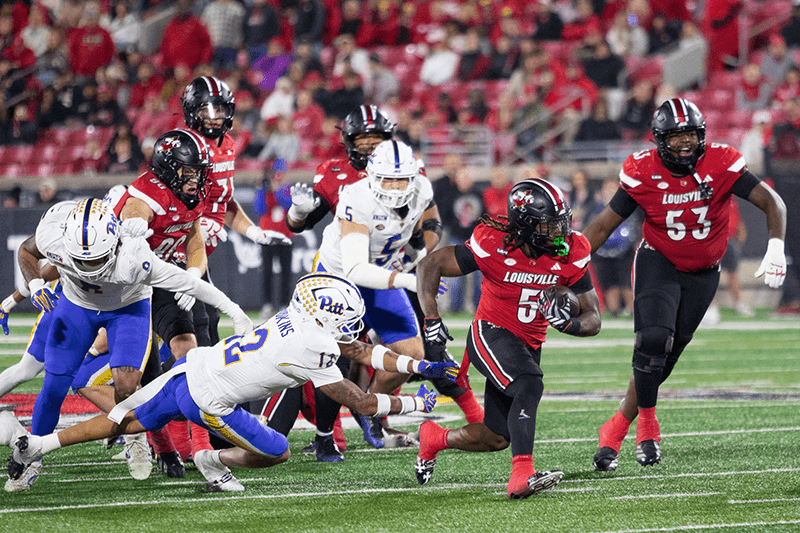
Then the second half got away from them. Louisville scored on each of its first three possessions after halftime. Its quarterback didn’t miss a throw after the break. Then came a fifteen-play drive that took more than ten minutes off the clock and put the game away.
Look closely at that drive, because that’s what an identity looks like. Louisville knew who it was, committed to it, and made Pitt stop it. Pitt couldn’t.
The time-of-possession imbalance made the job harder, and four turnovers made it harder still. Louisville turned those takeaways into twenty-one points. You can’t put a defense on the field that often, on that kind of field position, and expect it to hold forever.
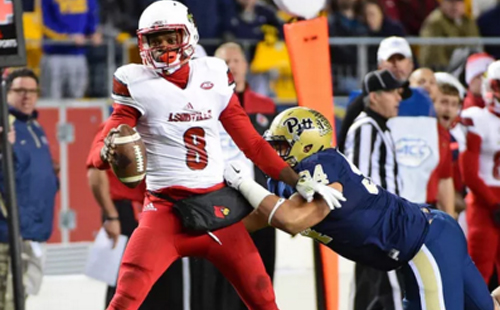
That still doesn’t excuse everything that happened defensively. The defense has to tackle, communicate, and finish possessions. An offense’s struggles can’t become permission for the defense’s own breakdowns. One recurring concern is the quick screen game.
Since Miami, I’ve watched opponents create space outside with formations and motion, then get the ball to receivers before Pitt can close. Miami exploited it again and again. FSU borrowed the same approach. I’m still seeing versions of the same problem. Whether the call is a bubble screen, a now screen, or another quick perimeter throw, the defense has to recognize the numbers, defeat the blocks, and pursue with the correct leverage. Someone has to force the ball back toward help. Someone has to get off a block. The next defender has to arrive under control and finish the tackle.
You can’t let a simple throw become an impact play because the offense outnumbered you or your pursuit lost its angles. When opponents keep finding success with the same family of concepts, the adjustment has to show up on game day, not just in the film room.
What Does Pitt Want to Be?
I can accept mistakes from inexperienced players. I can accept that injuries force adjustments and that some nights you’re facing a better, ranked opponent on the road. What’s harder to accept is watching the same problems return every Saturday without a clear sense of how this team intends to overcome them.
Dropped passes are execution failures. Avoidable penalties are discipline failures. Turnovers are ball-security failures. Asking players to repeatedly run concepts they haven’t mastered is a coaching problem. Each needs a different correction. None should become routine.
I want to see an offense that commits to what it does well. A quarterback given manageable answers. A defense that corrects the concepts opponents keep exploiting. And a team that plays like it knows exactly who it is. Most of all, I want to recognize the standards of a Coach Duzz team when I turn on the game.
Pitt vs. Louisville was a hard watch because I spent too much of the evening wondering what this team wants to be. That’s a question the captain has to answer.
Terry Murphy is a former Pitt Panther WR, football coach and guest contributor to DreamBackfield since October 2026.